

No. 52 - why do you want your home to look like a hotel?
And why are hotels trying to look like homes?
We say a hotel is ‘homely’ as praise, and a home is ‘hotel-like’ as praise. Both are compliments, yes, but they’re copying each other’s copies. After all, a homely hotel isn’t trying to be a home. It’s trying to be an idyllic, magazine kind of home. Meanwhile, a hotel-like home is trying to be a hotel that was trying hard to be a home.
Am I making any sense?
Hopefully, by the end of this newsletter, I will be.
It’s just that I've read countless design features and watched more TikToks than I'd care to admit, all promising to make my home look and feel like a luxury hotel. The irony, of course, is that every new hotel seems to be trying its best to feel more homely.
People make it seem as though both are worth aspiring to. But are they? Do we really want our homes to be like hotels, or our hotels to be like homes?

A few nifty upgrades and you too can buy the comfort of a hotel in your own home. Hotels, however, are approaching it from the other direction, with lobbies becoming the official living rooms of the city.
At the Shinola Hotel in Detroit (one of my favourites) Gachot Studios filled the public rooms with custom furniture, books and objects, while the Detroit gallery Library Street Collective curated the art. It's a deliberately residential approach and the effect is that of a space collected slowly over time. A nice enough sentiment on the hotel’s part.
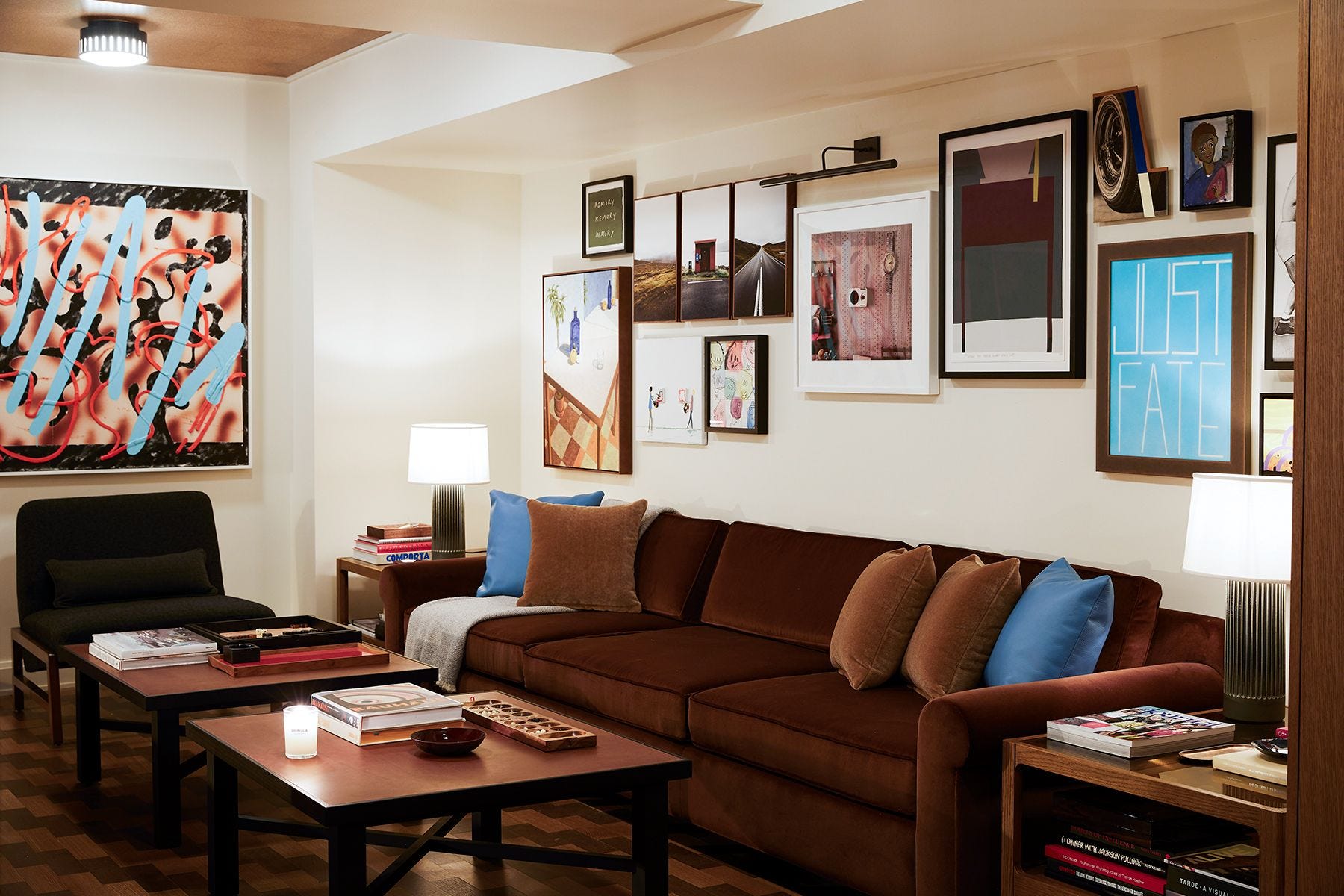
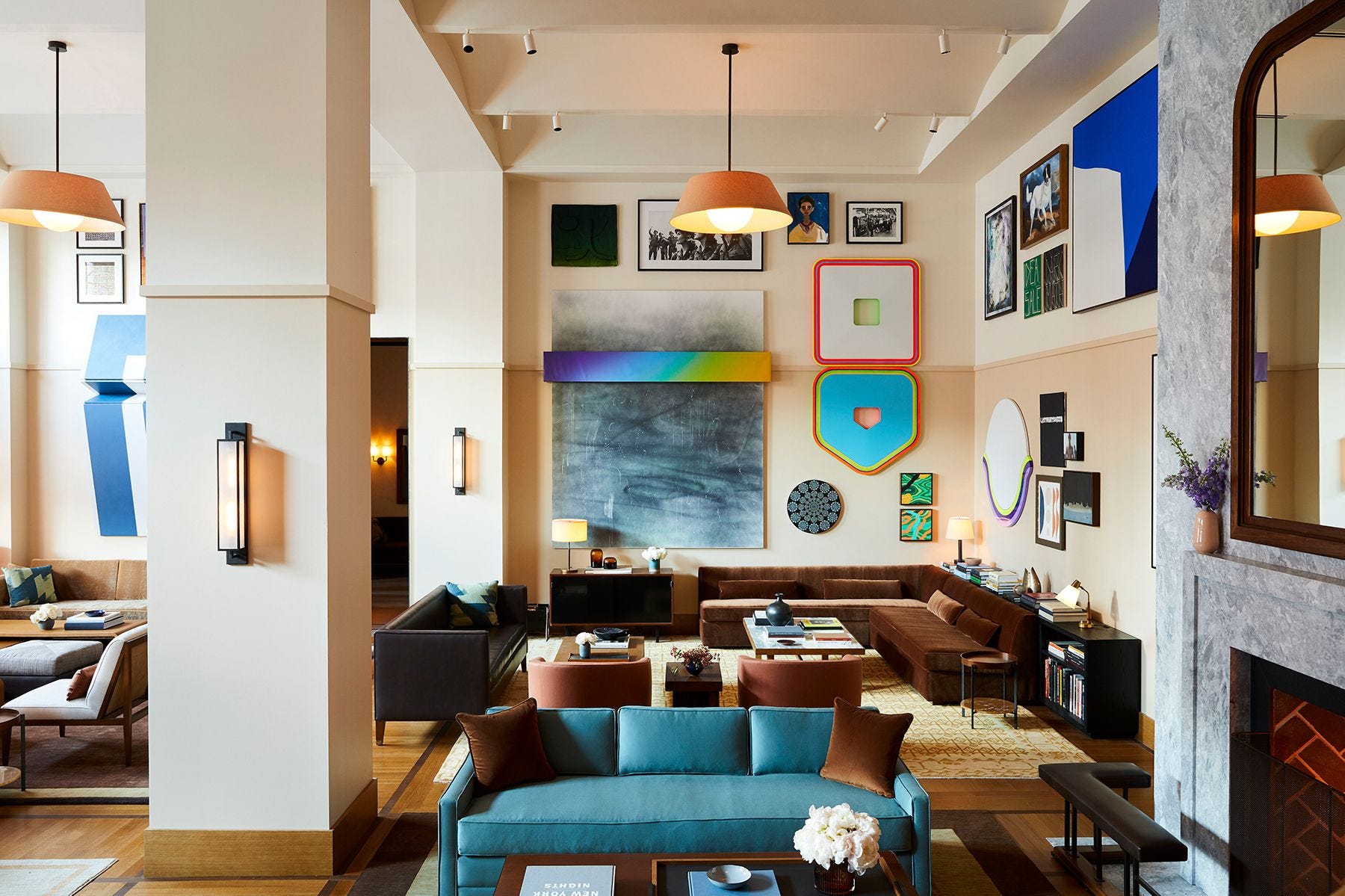
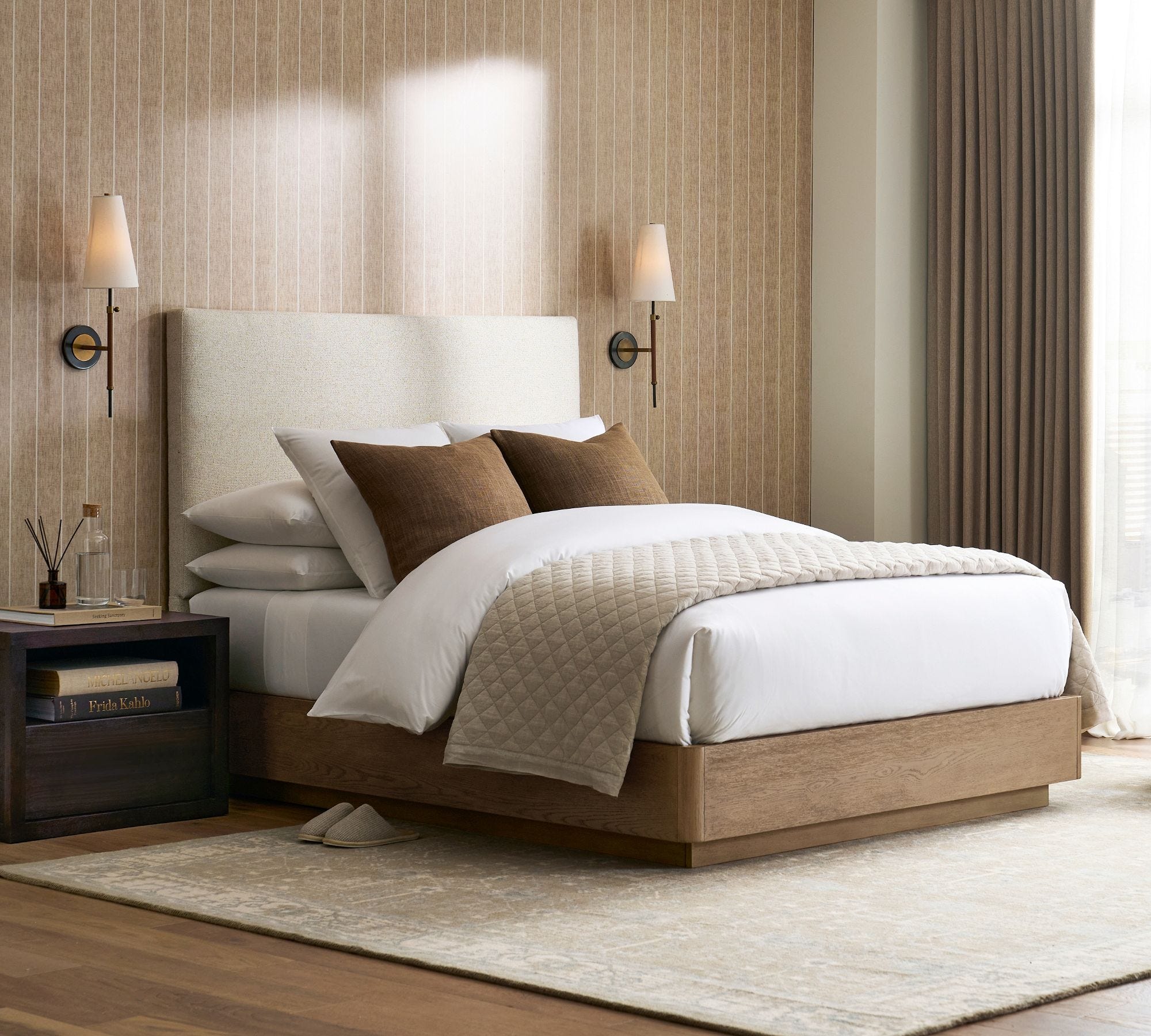
So let’s break down each look. When a home wants to pass as a hotel, it shops for a few specific things. That might include:
Crisp white bedding, pillows stacked in odd numbers and a runner laid across the foot (admittedly, I’ve taken inspiration here for my own bed)
Matching bedside tables with matching lamps. Symmetry, symmetry, symmetry!
Toiletries decanted into glass bottles, so supermarket brands remain out of sight
Rolled towels
A robe on a hook
A coffee station
A tray of miscellaneous items, neatly arranged
Marble, or the convincing look of it
Brass taps
A rainfall shower head (I’ll always vouch for a rainfall one)
A fat, upholstered headboard
Lamps and sconces, pooling warm and low
Millwork
When a hotel wants to look like a home, it goes hunting for the details that are usually too ordinary, or too personal, to be considered design at all:
Books. Real ones
Art hung salon-style, as if collected slowly and a little badly
Vintage rugs, layered over each other
A yummy, worn-in sofa
Armchairs
A record player
Someone’s ceramics
More lamps
It’s a noble feat. But it’s funny how the home covets a hotel’s polish, and the hotel covets a home’s fullness.
I wanted to know when all of this started, because it seems recent even though it isn’t. You can date it, more or less, to 1999, when Westin put the Heavenly Bed in its rooms and then sold it to you directly, over a hotline, so you could bring the hotel home.
It worked. They’ve sold more than half a million since. And once a hotel has proved you’ll buy its bed, they’ll start shilling the rest, a starter pack of sorts. You can now buy linens, pillows, candles, diffusers, robes, etc.
Eventually, Westin began selling the Heavenly Bed via Pottery Barn. Yes, Pottery Barn.
But why the hotel? Why is that the thing we measure our homes against?
I suppose they’re always clean and organised. The good ones are well-designed, and all of that makes a real difference to your wellbeing. A study found that women who viewed their homes as cluttered had cortisol levels that didn’t properly settle across the day. But it isn’t the mess itself that’s doing the damage. It’s what that mess signifies—anything you own that’s out of place is an unfinished task.
Psychologists call it the Zeigarnik effect, where the mind snags on what’s incomplete and won’t put it down. A room full of your undone jobs is a room reciting your to-do list back to you. You can’t rest in it because it keeps reminding you to get a move on.
A hotel room, however, asks nothing of you. Any task left undone will be cleaned up, and there’s a great sense of relief that comes with staying somewhere that allows you to just be.
This is why hotel-ifying your home is doomed. Because by all means, go out and buy the fancy linens, the dimmers and whatnot, but you’re the one who has to keep things looking prim and proper, day in and day out. What you actually want is staff.
Control is another part of it. Home is a sanctuary, and you get to set the terms and conditions as you see fit. That’s a luxury. But a hotel isn’t in your control, and that’s also a luxury. You own nothing, decide nothing, maintain nothing, and you can’t be held responsible for a place you didn’t furnish and won’t keep for long.
To want your home to feel like a hotel, then, is to want to be a guest in your own home. And when you say it like that, it’s a very strange thing to want on purpose. And a lot of us want it. On purpose.
So that’s us. On the hotel side, reaching for homeliness isn’t anything new.
We love this little slogan: home away from home. The earliest known uses anyone has traced are hotel ads, specifically British ones from 1839. The first American sighting turned up a few years later, in an 1843 notice for the Exchange Coffee House in Boston, which promised that a home away from home was ‘good change for any man's money’. The phrase was coined to sell rooms, and its whole premise is baked into the word ‘hospitality’, from the Latin ‘hospes’, meaning a guest, a host and a stranger, all at once.
George Yabu, half of Yabu Pushelberg, who have designed more of the rooms you have envied than you know, has said the brief is almost always the same: make guests feel like they’re at home. He thinks it’s the wrong brief, though. A hotel, in his mind, is supposed to be an escape from home, something stranger and more charged. A paradise built inside the guest’s head rather than a flattering copy of the life they already have.
I’ll tell you where I stand on all this because I’ve changed my mind quite a bit. I used to think my home had to look and feel like a hotel. But I don’t anymore, and I’m starting to agree with Yabu. I like that a hotel exists at a distance from my own life. My home is where my unfinished business lives. And a sanctuary scrubbed of my obligations isn’t a thing I can purchase when my obligations are, essentially, a part of the furnishing.
But I get it. This isn’t a trend to fix, or a hypocrisy to catch. It’s the most ordinary longing there is: to want the ease of a guest and the belonging of home at once. Except, you can’t have both at once. And that’s okay. It’s preferable, actually.

MIND
Do you ever go somewhere new and think ‘I have no business being here?’. Allow me to explain because I get this feeling often, usually when I’ve ended up somewhere I never pictured myself—somewhere younger me wouldn’t have seen coming. The first time I visited my husband’s hometown, for instance. Would I have gone there otherwise? No. There was no version of my life that routed through it. And then there was. When those moments arrive, I think of young Sanchita, who couldn’t have grasped how big the world is and how small it is at the same time. How you can spend years feeling certain of the course your life will take, only to find yourself completely off the route you planned. It’s so random. You take a job and you call a new city home. You make a friend and end up at their sister’s wedding in a country you’d never have booked a flight to otherwise. You say yes to one small thing and it rearranges a variety of other things. I don’t question it too much, though. I have gratitude for standing somewhere I didn’t plan. I see it as proof that life had far more imagination than I did, and it kept handing me turns I’d never have taken alone. Young Sanchita drew a small, careful map and assumed that would be it. I’m glad she was wrong.
THINGS
Cheers to whoever’s running the 1stDibs’ social media page. You’re doing a phenomenal job. I’ve been enjoying the buying guides and decorating advice.
When it comes to wedding guest attire, I’ve concluded there’s no accessory chicer than a fan (obviously I found this on 1stDibs. Not an ad. I’m just knee-deep in their site and loving it).

Thank you for reading and supporting The Other HAFH. I’m curious to know if you’ve tried to incorporate hotel-like elements in your own home. If so, what have you been experimenting with?
so true!!!
I think I love hotels because they are NOT my home. They're better. At a hotel I don't have to cook, clean, or worry if I put something away correctly. The desire to make ones home look that way is the desire to make it feel 'tended' to in the same way. I think?!?! ;)